
Home vs public charging, by the numbers
A clear comparison of charging costs at home and at public stations.
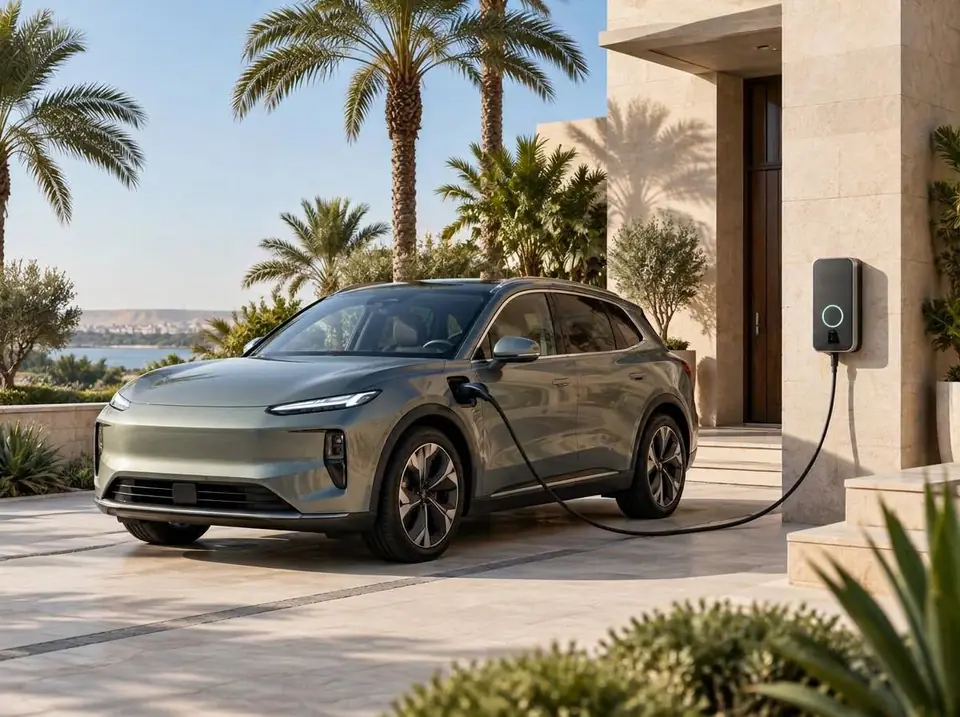
When you consider an electric car, the first practical question is: where will I charge, and what will it cost me? The answer depends on three things: how many kilometres you drive each month, how much electricity your car uses, and where that electricity comes from.
How much does your car use?
Most city electric cars use between 15 and 20 kWh per 100 km. In our calculator we use 17 kWh per 100 km as a default, and you can change it to match your car.
If you drive 1,500 km a month, your approximate consumption is:
1,500 km × 17 kWh / 100 = 255 kWh per month
Charging at home
Home charging means you pay for electricity at the residential tariff tier your bill reaches. The higher your household consumption, the higher the tier your charging is billed at — which is why we always recommend using the highest tier your bill reaches, not your bill's average.
On that basis, charging 255 kWh a month at the top tier (currently EGP 2.74 per kWh) works out to an indicative cost of around EGP 700 a month. This is an indicative estimate; the actual figure depends on your real tier and current tariffs.
Charging at public stations
Public charging stations — especially fast ones — are run by licensed operators who set their own prices, and the price per kWh is usually higher than the residential tier, because you are paying for charging speed and the cost of building and running the station. Shamsak does not sell charging and does not set these prices.
The practical rule: use public charging when you need it — on long trips or when no home charger is available — and don't rely on it as your daily option if you can charge at home.
Charging from the sun
If you have a solar system on your roof, part of your car's charging can come from daytime solar production, bringing the energy cost of that part close to zero — keeping in mind that the solar system itself has a cost. The more of your charging comes from daytime sunshine, the less you buy from the grid.
In short
- Home charging is usually the lowest-cost daily option.
- Public charging is a complement for trips and emergencies, at prices set by licensed operators.
- Solar charging lowers the cost further if you have a system on the roof.
Try the numbers yourself in the EV charging cost calculator — enter your monthly kilometres, your car's consumption and the public price you see today, and compare. All results are indicative estimates.